Monday, July 12, 2010

The Decoration of Houses by Edith & Ogden

As part of my reading plan I often read biographies of writers. I like to find out how writers planned their writing, when they started to write, where they lived and who they knew. Also what it was like to live in the era in which they lived. I find this fascinating.  


During this past few months I have read two very interesting biographies; one on the life of Edith Wharton and one on the Duchess of Newcastle both female writers. Edith Wharton is most famous for her novels. However her first book was ‘The Decoration of Houses’ written in 1897 with the architect Ogden Codman Jr.  


It is interesting as I returned to the subject of Art Nouveau and Art Deco I was reading the life story of Edith who lived in the US and France in this very era. As I wrote about these eras I was again stuck by how the influence of new styles slowly gain acceptance. We can sometimes look at periods of design history in isolation forgetting they are only part of a bigger picture.

Ogden and Edith’s decorating book was very influential. Edith believed rooms should be simple in design, be symmetrical with classic proportions. The book was a great success and is important to us in the design profession. It led to the emergence of professional decorators such as Elsie de Wolfe.


Codman Jr re-introduced the classical design of the Federal period. The wall colours and architectural detailing he used and recommended were an attempt to overcome the fussy, over the top designs of the Victorian era. In 1913-1915 Ogden designed the building that now houses the National Academy Of Design.


Edith came from a very well to do New York family. She loved architecture, gardens and design. She travelled extensively and fell in love with Italian classical designs. Edith wrote about her passion in the book ‘Italian Villas and Their Gardens’. She also designed and oversaw the construction of her home The Mount. It was built in the Palladian style and the garden was designed by her niece Beatrix Ferrand. The Mount is now a national US landmark.


Besides writing about design and gardens Edith wrote short stories, articles for magazines, travel essays and poetry. She is most famous for her novels ‘The House of Mirth’ a 1905 best seller and ‘The Age of Innocence’ for which she won the Pulitzer Prize of 1920. She was the first women to win this prize.

I thought it would be an interesting exercise to look through Edith and Ogden’s book ‘The Decoration of Houses’ in a few blogs.         

Saturday, July 10, 2010

Philippe Starck chairs available at Sample Board Online

Sample Board Online (SBO) the cool eco friendly design tool always has the best designs from the suppliers of quality interior design products. The Spazio Company featured on SBO is the supplier of some brilliant Philippe Starck chairs.


I finally watched the TV show Design for Life. The program is a 6 part series like an X Factor/Biggest Loser hybrid. During the show twelve British designers/students vie to win six months at the Philippe Starck studio in Paris.


Most people know Starck the famous designer one of his most famous designs the Louis Ghost Chair. He reveals some of his views on design; there are too many useless and non sustainable products. He encourages would be designers to look at the story behind the product.

Design he believes should help society toward a better life.
I totally agree with him. For a number of years now I have been interested in public and community health and design. At some stage I would love to do some research on the topic. I had even thought of going a Masters using this topic as a research project. But at this stage time and money have put the idea on hold. 


In the first episode Starck sent the budding product designers to find items in a supermarket. The articles selected have to fall into one of three categories functional, ecological or gender. Each person was asked to find two objects within one of these categories. 

With the functional choice a product considered to be functional and one not very functional needs to be selected. In the ecological category an environmentally sustainable product should be found and a non sustainable product should also be found. In the gender category a male and female related product should be selected.


The two people who do not accomplish this task successfully will be sent home. One of the main things this exercise revealed to me was the tenancy we have to go into panic mode when we are out of our comfort zone. I must admit I have been guilty of doing just that in similar situations.

It has a lot to do with confidence and self talk. If we are confident and positive we are more likely to relax and let the creative juices flow. Philippe wanted the searchers to think outside the box. This is difficult to do when we feel panicked. 


The young man who seemed to most impress Starck and his team did not panic he was confident and was positive in his words. I did find him a bit cocky and over confident. It will be interesting to see how he goes with other tasks.

Another thing revealed during this exercise was the amount of time spent, writing, researching and procrastinating. Designers do need time to think. With experience the ability to think and make decisions quickly will come. But it takes time to learn this skill. It’s really about left and right brain thinking and the ability to tap into the creative side. Well that’s what I think.  


I will follow the next episodes with interest.
‘Get the habit of analysis - analysis 
will in time enable synthesis 
to become your habit of mind'
Frank Lloyd Wright        

Saturday, July 3, 2010

Art Deco Lives on in The Cloud


Art Deco style often had classical design and motifs as a starting point. The designs were then simplified or abstracted to create new innovative designs. French designers led the way until the US embraced the new style and made it their own. 


The straight lines and geometric forms of Art Deco were often married to the emerging modern International Style. The US Art Deco then went on to influence many other countries around the world.


The Cloud
A set of furniture called ‘The Cloud’ is a classic Art Deco design created in 1929 and became popular in France and England. The original pieces were small scale parlor sets; chairs, sofas and love seats. 


The Cloud design was re-introduced by the Richam Corporation in New York in 1984. The living room suites are still made in the US in a wide range of leathers, fabrics and exotic timbers.    
Designers and decorators found the furniture suitable for commercial use in hotels, waiting rooms as well as for domestic use. They often use the cloud chair for group seating in lobbies. I just love the design. 

Gouda Pottery
Gouda Pottery has a magnificent range of Art Deco pottery produced in Holland (Netherlands). The ceramics were designed at Schoonhoven Pottery and by other companies in other regions in the 1920’s. Potters like Henri Bredvelt created pottery in vivid colours.


Dutch Gouda Pottery and Delftware in Yorkshire has a website dedicated to this wonderful range of pottery. The site has loads of information, images and links and is well worth a visit http://www.goudadesign.co.uk/

In Ireland when I was growing up dinner sets and other ceramics were often refered to as delf. When we arrived on holiday from England and an Aunty asked us to put the delf on the table we had no idea what she was talking about. I’m not sure if the term is still used today. When I finally get back to Ireland I must remember to check.


Link to Art Deco Quiz
Well this brings me to the end of a look into the Art Deco era. I have had a wonderful time rediscovering this brilliant style.  If you would like to test your knowledge just follow this link and try a fun Art Deco Quiz. http://www.vam.ac.uk/vastatic/microsites/1157_art_deco_quiz/quiz.php?ref=st08a

‘An idea is salvation by imagination’
Frank Lloyd Wright

Thursday, July 1, 2010

Aussie, New Zealand and South African Art Deco


As I have spent time looking at the Art Deco period I have had moments of memories flooding my mind. I remember the visits to the Art Deco style Broadway cinema in Belfast when I was a small child.This building was so different from the other luxurious cinemas we usually went to.


Besides the Art Deco fireplace and cabinets my Granny also had the stuffed curved chairs and sofa of the era. (Many’s a time as the Irish say) I was told off for sitting on the arms of the furniture. My Gran was always telling us to act like ladies.


We were not allowed to chew gum, cross one leg over the other at the knees, whistle or speak until spoken to. The same lady my Gran who enforced these restrictions completely changed character on a Saturday night when the whole family would sit around the fire. Each family member told a joke, sang a song or told a ghost story. Granny’s stories and jokes were usually the best.


Next morning Sunday Gran was back to her old self. She would call everyone to get up and go to church. ‘We are not a pack of heathens’ she would say. I smile as I remember her many similar statements. My Gran from her over stuffed bulky chair beside the fire ruled the roost.


I am so enjoying looking at the Art Deco era I don’t quite know how to end. There is so much still to tell. But I feel I do need to move on. The short Art deco era produced many wonderful buildings and items so I thought I would try and finish the topic by looking at some examples of Art Deco work around the world.


In Australia

Innisfail in Queensland is thought to be the Art Deco capital of Australia. The Chelsea Park guesthouse in the Southern Highlands just south of Sydney is an example of Art Deco in NSW. Many Art Deco buildings exist in Victoria many cinemas and theatres; Art Deco in style. If you follow this link http://www.caths.org.au/ you can find examples of cinemas and theatres (in Victoria) many in Art Deco style.


New Zealand

There are many Art Deco buildings in Hastings, Wellington and Palmerston North


South Africa

Durban has many Art Deco buildings. Prince Edward Street has some fine examples. The South Africa Art Deco style was influenced by the USA Art Deco style. If you go to this link you will find more information and virtual tour http://users.iafrica.com/a/an/andryn/


I will finish this blog now and complete the study of Art Deco in my next blog.

Sunday, June 27, 2010

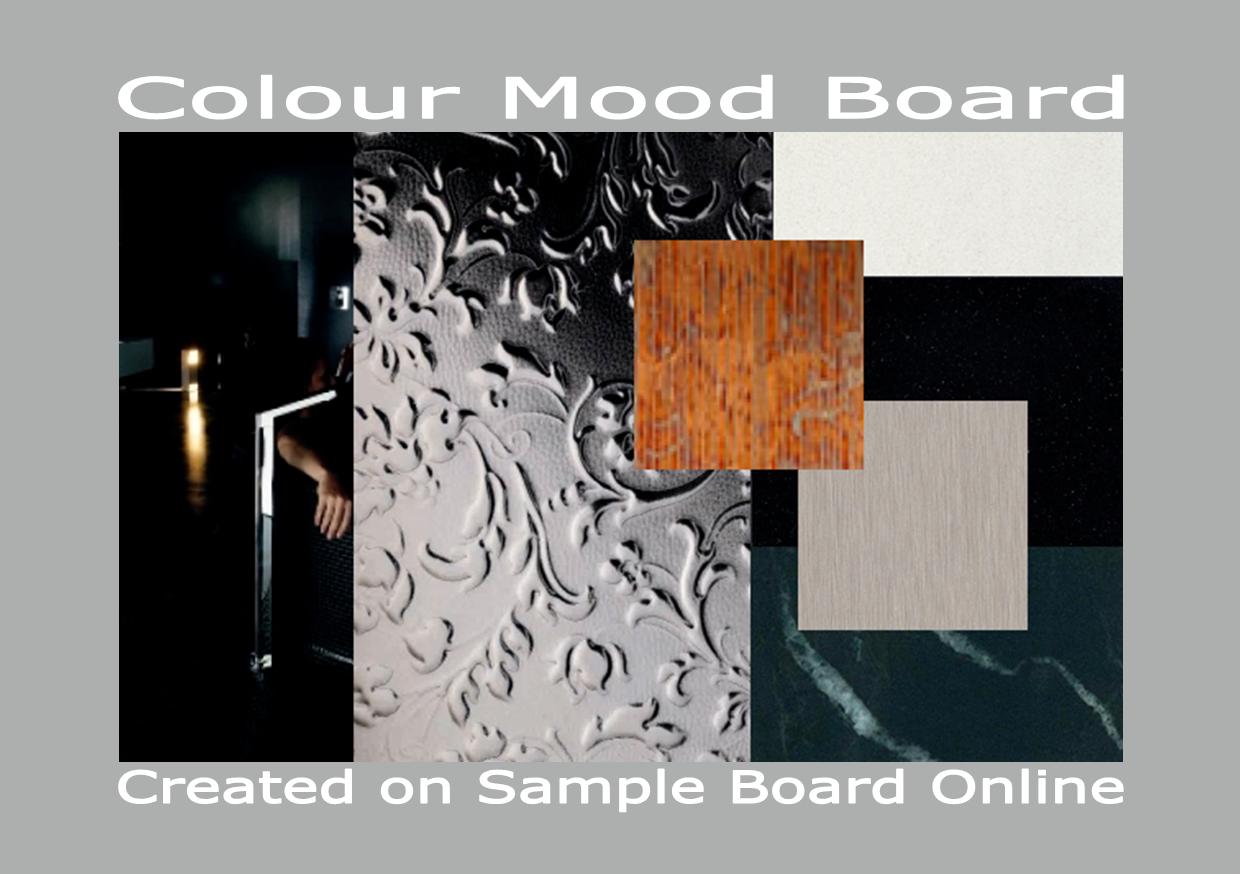
Colour Mood Boards


Sample Board Online is a brilliant tool for playing around with colour and creating colour schemes no matter what your design discipline. 


In this blog are some examples of mood boards created on the Sample Board Online website. If you have followed the link from the article ‘Talking about tones:  An easy way to create a colour scheme for your home’ I hope you find the boards helpful. Why not have a try all your need to do is create an account http://sampleboardonline.com and then just have some fun.


However I must warn you it can be addictive. For those of you who would like to read the article just follow this link http://www.articlesbase.com/interior-design-articles/talking-about-tones-an-easy-way-to-create-a-colour-scheme-for-your-home-2730246.html 

 
Happy Colouring  

Saturday, June 26, 2010

Are you taking full advantage of your business card?

Business cards have been around for a long time. Some think the first business cards were used in China in the 1400’s. In 17th century Europe cards were used by the aristocracy and in London trade cards were used to adverise businesses. In France during the mid 1600’s and early 1700’s visiting cards were used with a system of set rules.


By the 1800’s calling cards were used by the middle and upper classes. In most homes silver trays were placed in the hall to receive the calling cards of visitors. Business cards became popular in the US in the 1890’s. Since this time some interesting business card etiquette has developed. For example in Asia it is considered rude to present a business card with the left hand. It is also thought rude to put the card away without reading it.


Cards should be kept in pristine condition. Most cards contain the name of the card holder, his/her title, the company address, telephone number, email address and fax number. In some instances the mobile telephone number and website address are added. The business address is not always placed on the card. Most cards also have a logo and a company tag line or slogan.


How to take more advantage of your business card

When handing a card to a person give them more than one. This means they can hand your card to someone they know who may be interested in your business

Make sure you give your cards to people to whom it would be relevant

It sometimes pays to give your card to a competitor. They could end up with too much business and send business your way

Take every opportunity you can to hand out your business cards

Plan strategically and set goals

The mistake most business people make is – not passing out enough cards. There is no wrong way to get your information out to people. Make sure you have an ample supply and just keep on handing them out. The key is the odds are in your favor the more you hand out the more likely you are to drum up more business.

Friday, June 25, 2010

Some neat business writing tips


In my last year at school many of my friends wanted to be secretaries. My best friend’s sister worked in London and was earning a very good salary as a secretary. My friend talked me into doing some night classes in shorthand and typing. I hated it and was dreadful at both. Instead of turning up at the classes I would sneak into the art classes. Alas my parents found out and my evening classes were abruptly stopped.     


It amazes me now to think of those long ago days. If only I had learnt those skills I would have saved myself a lot of trouble. I never did learn to type as my Mum would say ‘the proper way’ In spite of the lack of professional skill I can type at a moderate speed. I did after all learn (asdf space ;lkj space) the first line and I am not a one finger typist.


These days there are very few secretaries around and many professionals need to write business letters. Over the years I have tried to develop my writing skills. I have completed many courses of study and been complemented on my writing. But I can still feel a wee bit inadequate and wish I had finished those classes many years ago.


I am always looking for ways to improve my writing so keep an eye out for informative books and websites. It is an ongoing process. I have also worked with others to help them improve their business letters and resumes. There has been a move away from the strict rules of yesteryear with the advent of advances in technology. However it is important to present a professional image and learn some tips and tricks for writing business letters.

Letters today need to be well crafted and concise. Job applicants are often advised to keep the covering letter of their resume to one page if possible. It is also a goal to aim at when writing bussiness letters. However the writer can often find they need to flow on to another page for the last few sentences. 

Shaun from Writing Help Central has a few suggestions to help writers overcome this dilemma. He suggests moving the left and right margins by 0.25cm (1/4 inch) closer to the edge of the page. You could also move the top and bottom margins closer to the edge by 0.25cm (1/4 inch). The spacing between lines can also be adjusted. Instead of the usual single 12 points try 11 points. 

Changing the font from 12 points to 11 points can also be a way of getting extra space. Often you will find you can get extra space by going back and doing some tough editing. Sentences with one or two words flowing over onto another line can often be reworked to eliminate the offending words. 

Sometimes two page letters are the best option. If this is the case create a well spaced easy to read professional document and you will be forgiven for breaking what is now considered by many to be the cardinal rule ‘one page business letters please’.  

For the full article and many other tips on writing business letters you can visit Shaun’s website http://www.writinghelp-central.com/sample-letters-business.html

Thursday, June 24, 2010

German & Scandinavian design during Art Deco Era

The Art Deco era was considered a time of luxury, vitality, exuberance and decadence. At the same time  eclectic styles and a move to modernism was evident. Historical sources as a starting point for new designs were used. Industrial methods and technological advances were also being used.


The most famous influence on modern design the Bauhaus was opened in Germany by Walter Gropius in 1919. This school of design combined architecture, industrial and graphic art.


The principles of William Morris and the Art and Craft movement were embraced. Fine art and practical craftsmanship were combined and the needs and influence of the modern industrial world were a major consideration. The International Style grew from these beginnings. The new profession of industrial design also developed at this time. Industrial design and Art Deco design led to streamlined designs of kitchens and bathrooms.


In the Scandinavian countries the ‘Swedish Modern’ and ‘Danish Modern’ styles appeared. Traditional craftsmanship and materials were honored and comfortable interiors and furniture the result. The work tended to be warm and avoided what some thought the cold appearance of modern designs.


Gunnar Asplund’s Senna Chair was designed in 1925 as was Bruno Matheson’s Extension Table. Both examples of Swedish design. Kaare Klint’s furniture and Mogens Koch’s folding furniture are examples of Danish design. The Finnish designer Eliel Saarinen’s interiors and furniture have strong Art Deco links.

Wednesday, June 23, 2010

Art Deco UK


The fireplace with mottled tiles, brass fire implements and the beautiful curved sideboard I now recognise as Art Deco. As a child I was unaware of how valuable (what I thought old and dated) were the furniture and accessories of my granny’s Irish home. Although the wallpaper and linoleum were often changed the old fireplace and Art Deco furniture and other pieces remained. I disliked the fireplace. This could be due to the fact I often had to clean out the ash, set the fire ready to light and go out into the cold night to get coal. 


I now value the pieces of Art Deco and can appreciate the workmanship and design. My granny would have bought many of these pieces in the first years of her married life yet they were still there when we left Ireland for Australia in the 1970’s.    
In the British home living rooms had the fireplace surrounded with pink, green or beige mottled matte tiles. Other colours used in the room were creams, eau-de-nil or oyster. The timber furniture tended to be pale and veneered in simple designs. Up lights, frames, mirrors and other items had stepped profiles.


The fabrics used in upholstery were plain or geometric. The linoleum floors had abstract designs or were black and white check. Parquet floors were also popular. In the 1920 UK magazine ‘Idea Home’ had an article on how to make large cushions in luxurious fabrics with tassels. Cushions in this style were the latest craze in the UK the article title; ‘The Indispensible Cushion: How to make them and where to place them’ 


Red and black tiles made by Carter & Co in Dorset England were designed with graphic linear motifs based on objects like fans and stylized flowers were also popular. The tiles were mottle matte eggshell glazes with random crackles and star burst effects and used to tile around fireplaces were also used for entire kitchens or bathrooms.
The bold geometric patterns and designs in the Hoover Building is a brilliant example of Art Deco design in the UK. The Hoover factory in Perivale West London was built in 1932 and designed by Wallis Gilbert and Partners and is a well know example of the Art Deco style in Britain.   

One of the finest examples of Art Deco in the UK is Eltham Palace. If you go to this link http://www.english-heritage.org.uk/book-and-buy/venue-hire/eltham-palace/  you will find information and details on Eltham Palace built in the 1300’s. An Art Deco extension was commissioned in the 1930’s by the owners. The 15th century Great Hall was also restored. Art Deco the style went into decline about 1935. However there have been revivals in the 1960’s and 1970s.    

Saturday, June 19, 2010

Art Deco USA


After the success of the 1925 Paris exhibition the USA was greatly influenced by French Art Deco. The Americans loved the bright surfaces and abstract patterns of the style. The Art deco motifs of the rising sun and the stepped ziggurat became popular. At the 1933 World’s Fair ‘Century of Progress’ in Chicago the shapes and designs of Art Deco were prominent.


The skyscraper designs of the Chrysler building designed by William van Alen in 1930 had sleek aluminum-banded facades, arches and a pointed spire. Donald Deskey designed the interior of Radio City Music Hall built in 1931. The Empire State buildings is another example of this magnificent style. Ely Jacques Kahn designed Art Deco skyscraper entrance lobbies using brilliant colours and luxurious materials with the Art Deco motifs designs and shapes.


Large department stores and theaters had brilliantly coloured carpets with abstract designs. The US embraced the style and made it their own. In the home linoleum in the bold colours and designs of Art Deco ensured it would continue to be popular as did parquet floors. Zebra skin rugs and other animal skin rugs were in vogue and placed over plain wall to wall carpets.


In the USA Art Deco designs became more geometric and linear. This married well with the rise of the minimized modern design. Art Deco items could easily be mass production making the style available to the masses.